Field notes

The Indian AI Talent Gap in 2026: Data and What to Do About It

Published Wed Apr 29 2026 00:00:00 GMT+0000 (Coordinated Universal Time)

An honest look at India's AI talent gap in 2026 — what the gap actually is, why graduate counts mislead, and what universities and employers can do that would actually close it.

Painterly abstract on cream paper: a brooding indigo cloud-mass on the left from which thin indigo filaments flow rightward like vines, scattered amber points of light concentrating toward the right like a constellation forming, and a broad amber brushstroke sweeping across the middle.

AI in higher education · 2026-04-18 · ~9 min read
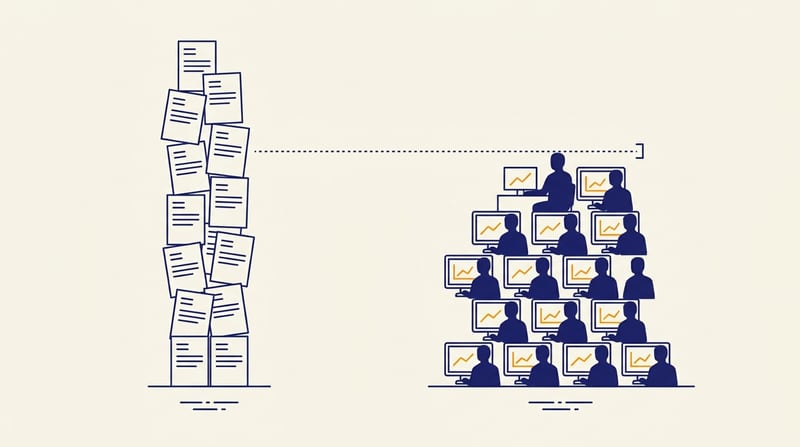
Editorial illustration of two stacked silhouettes: a tall column of resumes labelled 'AI engineers' and a shorter column of figures actually shipping code, with a dotted line measuring the difference between them.

The standard story about Indian AI talent has two halves, and they contradict each other.

  1. India produces more engineering graduates than any other country in the world, and the largest single share of the global tech workforce. By that account, India should be the most over-supplied AI talent market on earth.
  2. Every Indian AI hiring manager you talk to says they cannot fill their open requisitions, the candidates they do interview are weak, and salaries for actually-capable AI engineers in Bengaluru are now within shouting distance of their Bay Area equivalents. (Senior GenAI engineers at Bengaluru product companies routinely clear ₹35–80 LPA, with remote-for-US roles pushing past ₹60–80 LPA — a ~9× gap on the equivalent US comp has narrowed sharply over the past three years.1)

Both halves are true. Reconciling them is the work.

What the gap actually is

Reframe the gap from quantity to capability

A useful framing: the gap is not a quantity gap. It is a gap between the number of people described as AI engineers on resumes and the number of people who can demonstrably do AI engineering work.

The gap is not a shortage of resumes. It is a shortage of demonstrable capability behind those resumes.

Dimension
Resume-described AI engineers
Demonstrably capable AI engineers
Signal
Self-reported, certificate-counted, MOOC-backed.
Shipped models, evaluated outcomes, on-call experience.
Volume
Plentiful — India produces more than any country.
Scarce — every hiring manager reports unfilled roles.
Predictiveness
Weakly correlated with on-job performance.
Strongly correlated; what hiring partners actually pay for.

Map the four patterns recruiters keep flagging

Specific patterns we see, drawn from the recruiter feedback that goes into our Skill Score rubric:

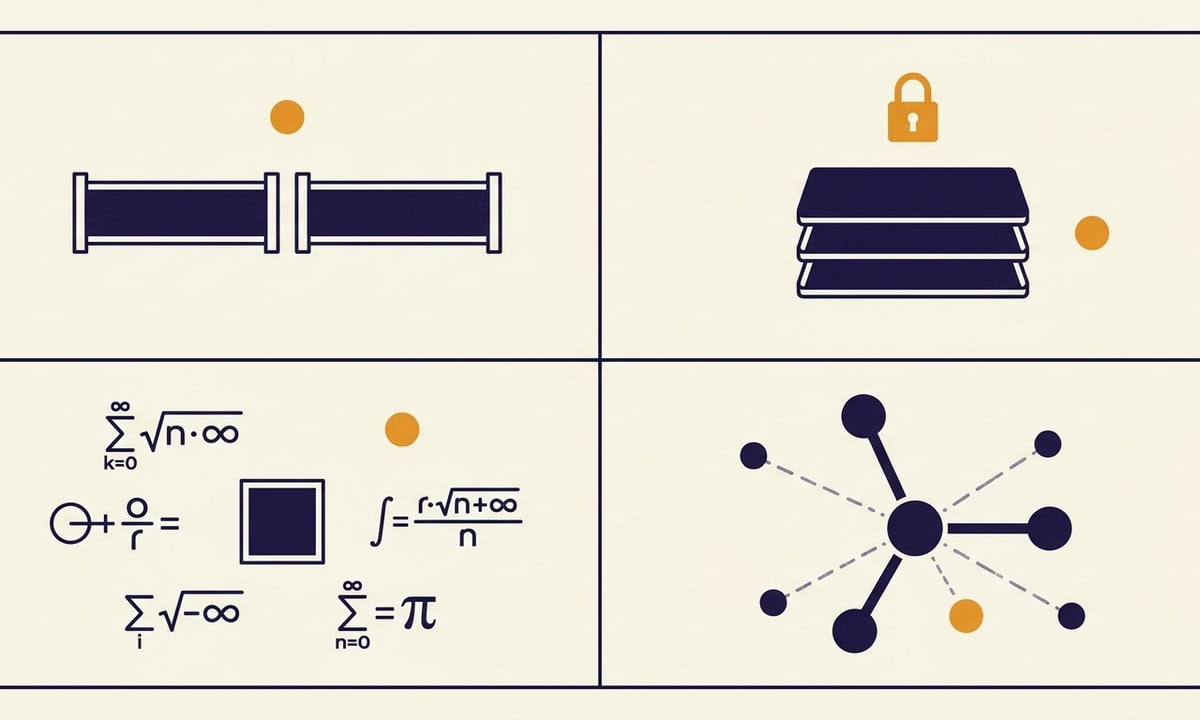
  1. Toolchain fluency stops at the demo. Candidates can run a tutorial. Many cannot debug a model that fails silently in production, evaluate one model against another with a defensible methodology, or trace a data quality problem to its root.
  2. The certificate ceiling. Candidates have completed five MOOCs and have eight LinkedIn certifications. None of these involved supervised assessment, and almost none required shipping work. The certificate count is not predictive of capability.
  3. Mathematical foundations are uneven. Linear algebra and probability under exam conditions: fine. Linear algebra and probability applied to deciding whether a model's confusion matrix actually matters for the business problem: shaky.
  4. AI-fluency stops at CS. A serious AI-using lawyer, journalist, or operations manager is genuinely rare. The current Indian university system has not yet trained for this profile at scale, and the gap is wider than the engineering-side gap because there is no historical pipeline to recruit from.
  • Demo-ceiling toolchain

    Tutorial-fluent, production-fragile. Cannot debug silent failures.

  • Certificate ceiling

    Credential count not predictive of capability. No supervised work behind them.

  • Uneven math foundations

    Exam-strong, application-shaky. Unsure when a confusion matrix matters.

  • AI-fluency stops at CS

    No pipeline outside engineering. Capable AI-using lawyers and journalists are rare.

Four small diagrammatic vignettes side by side, each illustrating one capability gap pattern: a broken pipeline, a stack of certificates, scattered equations, and disciplines disconnected from a central CS hub.

What the standard fixes do not fix

Recognise the wrong defaults

The default policy responses address the resume-count gap rather than the capability gap. They make Patterns 1, 2, and 3 worse, not better:

  • "Scale up engineering enrollment"
  • "Train more bootcamp graduates"
  • "Import more curriculum from US institutions"

Adding more graduates to a pipeline that already over-produces resumes does not move the capability curve. It moves the noise floor.

Identify what actually moves capability

What actually moves the capability gap is harder to operationalise:

  • Supervised, project-led teaching at undergraduate scale
  • Faculty who have worked on real AI systems within the last three years
  • Assessment regimes that test capability rather than test-taking
  • Industry-side calibration loops that update curriculum every academic year, not every five
  • Discipline-specific AI literacy outside CS

None of these scale through tutorial videos or PDF handouts.

Directional impact, illustrative

What actually moves the capability gap

Default policy responses move resume counts more than capability. The fixes that work are operationally harder.

01.32.53.85Enrolment scale-upBootcamp expansionImported curriculumProject-led teachingActive-practitioner facultyCapability-led assessmentIndustry calibrationCross-discipline AI4-14-14-12414141424
  • Effect on resume count
  • Effect on capability gap

Source: Kompas hiring partner network, qualitative; values directional, not measured.

The 2026 employer view

Decode what recruiters actually screen for

What recruiters in our hiring partner network actually look for, distilled by role family:

  • ML engineering roles: evidence of having shipped — model in production, measurable evaluation, on-call for at least one incident. A capstone with these properties beats three years of "AI-related projects" on a resume.
  • Applied AI / prompt engineering / eval roles: a portfolio of real evals, not just a portfolio of demo apps.
  • Research-leaning roles: publication or workshop submission, even if rejected. Process-evidence beats credential-evidence.
  • Non-engineering AI roles (product, ops, consulting, journalism, healthcare, law): a track record of using AI tools to do the job differently, with output that holds up under scrutiny.

The common thread across every role family: evidence-led, not credential-led.

Role family

What recruiters screen for

  • ML engineering — shipped model, evaluation, on-call incident.
  • Applied AI / evals — portfolio of real evals, not demo apps.
  • Research-leaning — publication or workshop submission, accepted or not.
  • Non-engineering AI — job output transformed by AI use, holds under scrutiny.

Common signal across roles

Evidence-led, not credential-led

  • Process evidence beats credential evidence.
  • Capstones with deployed work beat 'AI-related projects' on a resume.
  • Track record of changed working practice beats certificate count.
  • External review by panel beats single-marker grading.
Distilled from the 2026 hiring partner intake into the Kompas Skill Score.
A recruiter at a desk weighing two stacks: a tall stack of certificates on the left, a single laptop showing a deployed model dashboard on the right, the right side of the scale tipping down.

Read recruiter expectations against current supply

By institutional tier

Recruiter demand vs capability-verified supply

Distribution of capability-verified graduates against the AI roles employers want to fill from each tier. Illustrative — exact values forthcoming in the AI Skills Index.

0%25%50%75%100%IIT/IIMTier-1 privateTier-2 privateTier-3State60%55%25%60%10%50%4%35%2%25%
  • AI-ready graduates (capability-verified)
  • Roles employers want to fill from this tier

Source: Forthcoming Kompas AI Skills Index, 2026 H2 (illustrative).

What universities can do

Sequence three concrete moves

Three concrete moves, in order of leverage:

  1. Restructure assessment. A capability-led rubric, with panel review and external assessors, changes everything downstream. Our Skill Score rubric is published openly; use it or adapt it.
  2. Invest in faculty enablement. Imported curriculum without aligned faculty produces Pattern 1 graduates. Track E is the version of this we run; build your own version if you want to do it in-house.
  3. Build the discipline AI tracks. AI literacy outside CS is the highest-leverage move available to a university right now, because almost no one is doing it well. See Track D and the discipline modules.
  1. Restructure assessment

    Capability-led rubric, panel review, external assessors. Highest leverage move.

  2. Enable faculty

    Active practitioners, recent shipped work, paid time to learn. Track E is one delivery model.

  3. Build discipline AI tracks

    AI literacy outside CS — law, ops, journalism, medicine. Almost no one is doing this well.

What employers can do

Move on two unglamorous levers

Two moves, both unglamorous but high-leverage:

  1. Calibrate against verifiable evidence, not certificates. The principle behind the Kompas Skill Score is that interview yield improves materially when the screening signal is demonstrated capability rather than credentials. This is consistent with the long-running evidence that structured work-sample tests outperform credential-based screening — see Schmidt & Hunter's meta-analysis on the validity of selection methods.2
  2. Invest upstream. Internship pipelines built two years before graduation, paired with curriculum input, produce visibly different talent pools. This is consistent with the broader pattern in NASSCOM's GCC reporting, where parent organisations describe early-career partnerships with universities as a material driver of hiring efficiency in India.3

If you hire AI talent in India

Calibrate on verifiable evidence. Start the pipeline early.

Use a capability-led signal as the primary screen, and start your internship pipeline at the second year — not the final year.

Become a hiring partner

A two-year horizontal timeline showing an employer engagement track parallel to a student academic track, with internship and curriculum touchpoints joining the two tracks.

The optimistic version

Picture the next five years if this works

The optimistic version of the next five years for India is the one where the talent supply gap closes, not by graduating more engineers, but by graduating engineers and non-engineers who can both demonstrably do the work.

The talent gap closes when the unit of supply changes from "graduate" to "graduate with verified capability."

Three trajectories

Capability-verified AI graduate supply, 2026–2031

Resume-described supply rises in any scenario. Capability-verified supply only rises with coordinated reform. Illustrative.

Graduates per year (illustrative)0k125k250k375k500k202620272028202920302031
  • Resume-described AI engineers (status quo)
  • Capability-verified graduates (status quo)
  • Capability-verified graduates (coordinated reform)

Source: Modelled in the forthcoming State of AI in Indian Higher Education report.

That requires a coordinated change across three actors:

  • Universities — assessment, faculty, discipline tracks
  • Employers — evidence-led screening, upstream investment
  • Credentialing bodies — capability-verified, externally assessed signals

It is doable. We are trying to do a small slice of it, on partner campuses. The longer version of the analysis is in our forthcoming State of AI in Indian Higher Education report.

A triangle diagram with universities, employers, and credentialing bodies at the three vertices, with arrows showing the calibration loop between them.

Footnotes

  1. India 2026 AI-engineer salary distributions per Glassdoor / SalaryExpert / Taggd compilations: mid-level ₹15–40 LPA, senior ₹35–80 LPA, GenAI premium of 20–40%; remote roles for US-headquartered employers ₹60–80 LPA+ from Bengaluru/Hyderabad. https://taggd.in/blogs/ai-engineer-salary/

  2. Frank L. Schmidt & John E. Hunter, "The Validity and Utility of Selection Methods in Personnel Psychology," Psychological Bulletin (1998) — work-sample tests rank among the highest-validity selection methods (r ≈ 0.54), far above unstructured interviews or credential screens.

  3. GCC Annual Report 2024, NASSCOM, on early-career and university-partnership hiring as a structural advantage for India-based GCCs. https://community.nasscom.in/communities/global-capability-centers/gcc-annual-report-2024

Related reading